


GMP-Ready Recombinant Human IL-2 Protein

IL-2
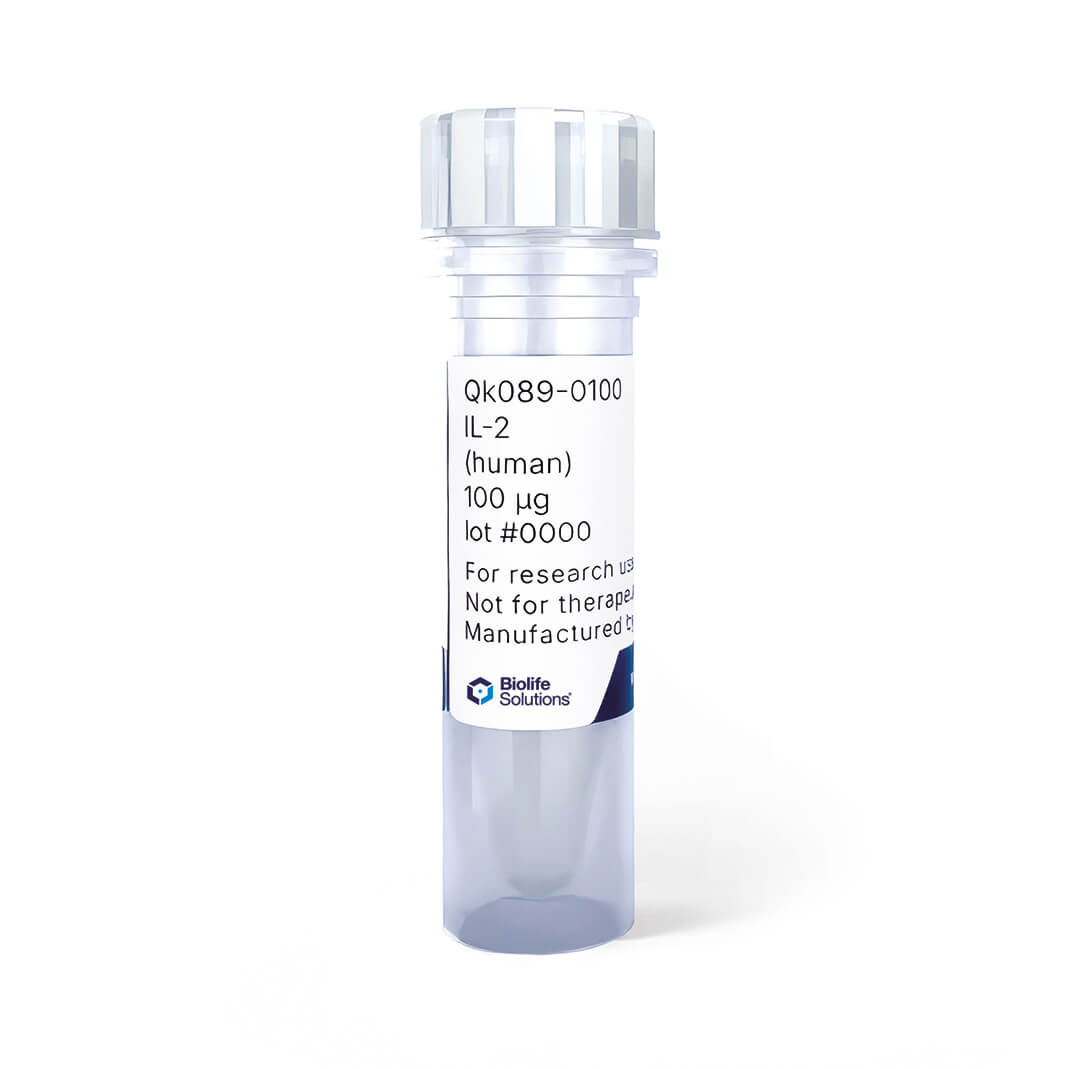
Support T-cell and NK-cell expansion and activation with highly pure, animal origin-free IL-2 complete with regulatory documentation
Human interleukin-2 (IL-2) is a key cytokine that regulates immune responses by driving T-cell and NK-cell proliferation and differentiation. In a dose- and context-dependent manner, IL-2 enhances effector function while supporting regulatory T-cell (Treg) maintenance, enabling balanced immune activation and control.
The IL-2 manufacturing process has been optimized to produce a highly bioactive protein with excellent lot-to-lot consistency for enhanced experimental reproducibility.
- Activation of T-cells and natural killer (NK) cells
- Differentiation of T-cells
- Development and maintenance of regulatory T-cells (Tregs)
- Promotion of the expansion of effector T-cells
- Expressed in E. coli
- Animal origin-free (AOF) and carrier protein-free (CF)
- Manufactured under a certified ISO 9001:2015 Quality Management System
- 15.5 kDa monomer
- >98%, by SDS-PAGE quantitative densitometry
- Lyophilized from acetonitrile, TFA
- Reconstitute in sterile-filtered water at >50 μg/mL, add carrier protein if desired, prepare single use aliquots and store frozen at -20°C (short-term) or -80°C (long-term).
- Qk089-0050 = 50 µg
- Qk089-0100 = 100 µg
- Qk089-0500 = 500 µg
- Qk089-CTG-0500 = 500 µg
Please download IL-2 resources here:
Applications


T cells

CAR-T

NK Cells

Car-NK
A core expansion cytokine for T and NK-cell workflows.
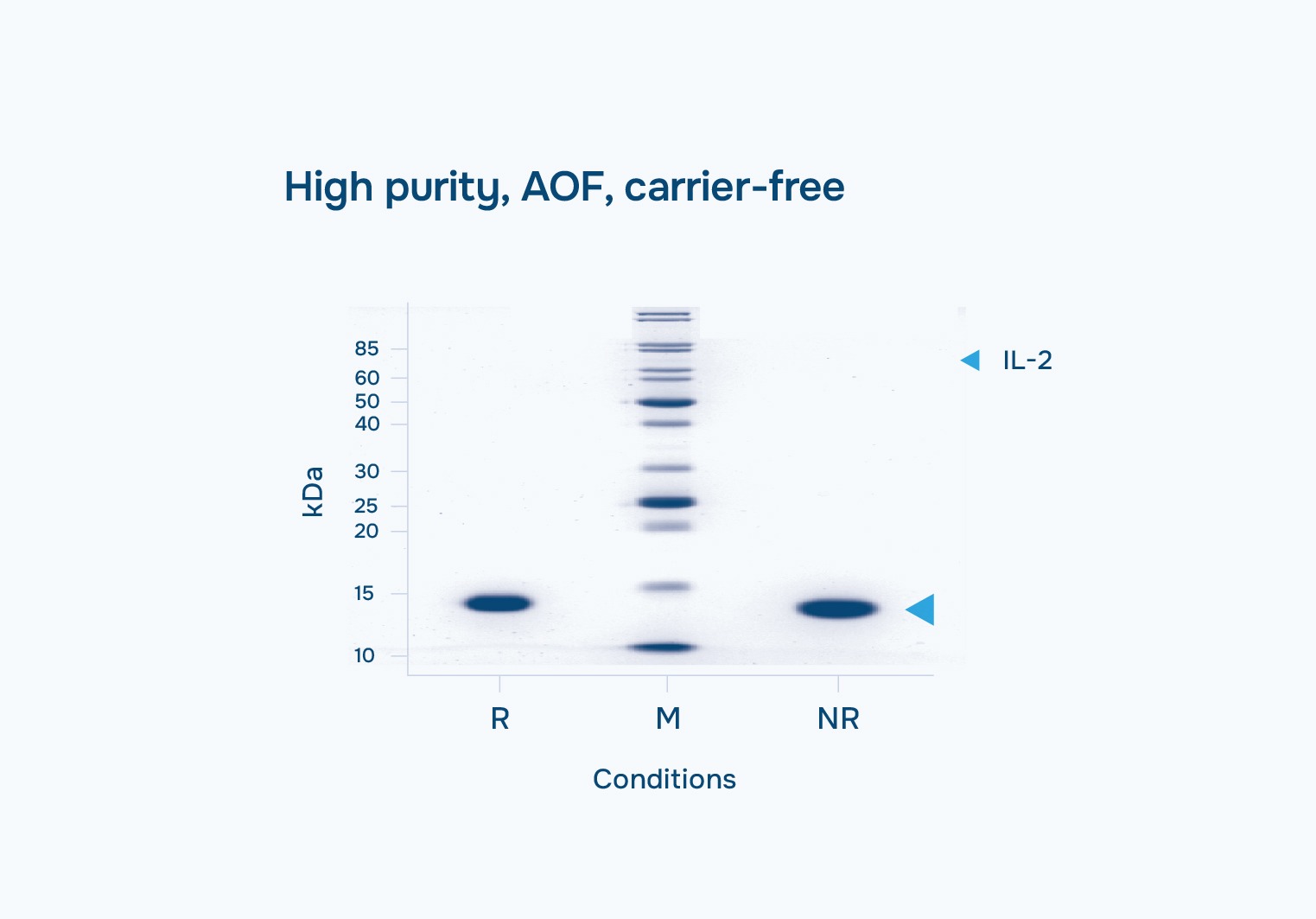

High Purity
Recombinant IL-2 migrates at approximately 15.5 kDa (monomer) in reduced (R) and non-reduced (NR) conditions. No contaminating protein bands are present. The purified recombinant protein (3 µg) was resolved using 15% w/v SDS-PAGE in reduced (+β-mercaptoethanol, R) and non-reduced (NR) conditions and stained with Coomassie Brilliant Blue R250. Data from Qk089 lot #204686.
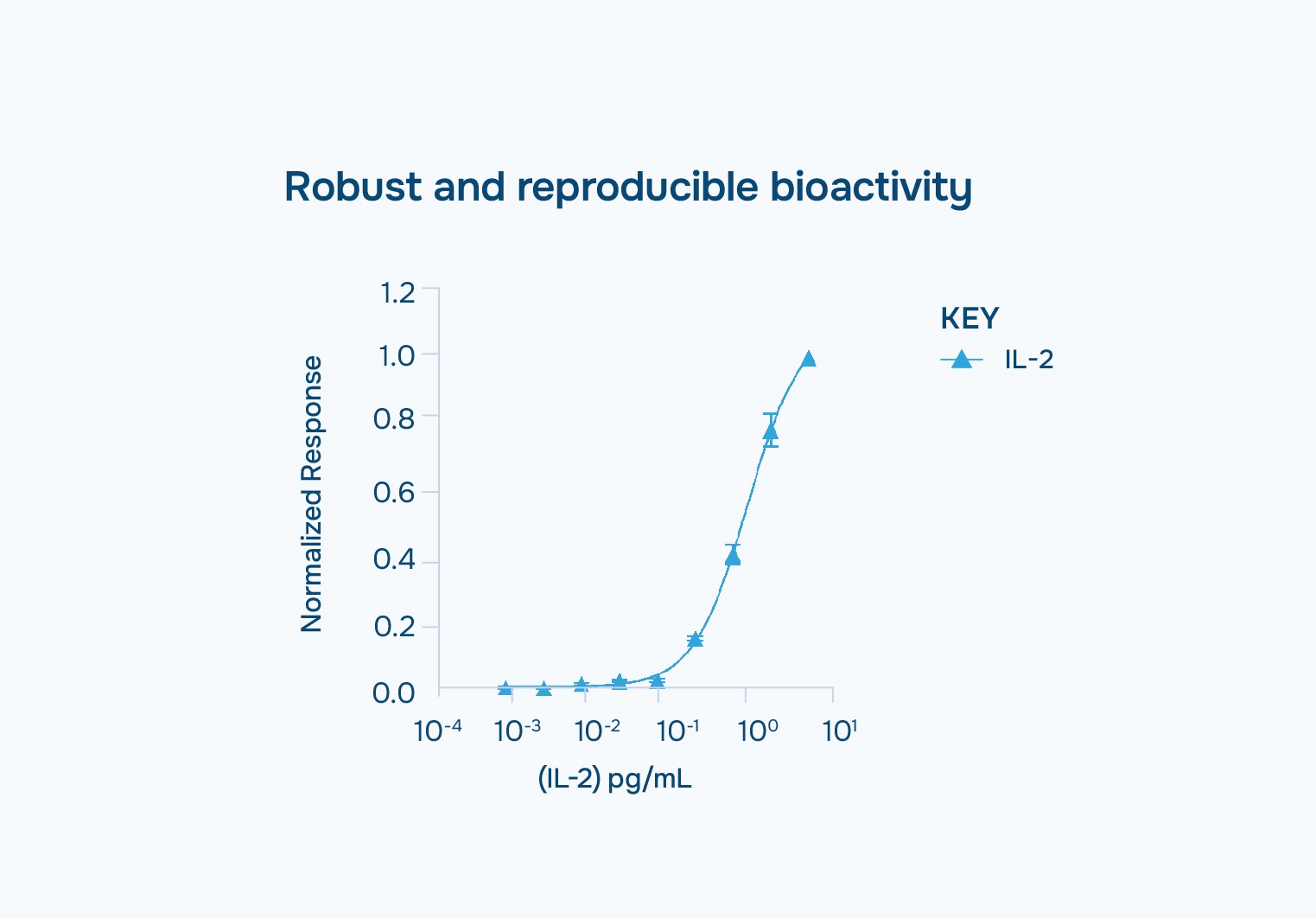
Bioactivity
Recombinant IL-2 activity was determined using a SRE luciferase reporter assay in transiently transfected HEK293 cells co-transfected with the IL-2 receptors (IL-2Rβ and IL-2Rγ). Transfected cells were treated in triplicate with a serial dilution of IL-2 for 3 hours. Firefly activity was measured and normalized to the control Renilla luciferase activity. Data from Qk089 lot #204686. EC50 = 0.86 ng/ml (55 pM).

How can we help you?
Sales inquiries
Product Background
Interleukin-2 (IL-2/IL2) is a cytokine that plays a vital role in the immune system, particularly in T-cell development, growth, and activity. IL-2 is produced mainly by activated CD4+ T-cells in response to antigenic stimulation and is essential for both immune response amplification and immune regulation [1,2].
IL-2 is a single-chain glycoprotein composed of 133 amino acids with a molecular weight of 15.5 kDa. The IL-2 receptor (IL-2R) is a complex made up of three subunits: IL-2Rα (CD25), IL-2Rβ (CD122), and the common gamma chain (γc, CD132). When IL-2 binds to its receptor, it activates downstream signaling pathways like JAK-STAT and PI3K-AKT, promoting cell survival, proliferation, and differentiation [3].
IL-2 is critical for the expansion of effector T-cells, which are responsible for attacking and eliminating pathogens and cancer cells. It also plays a role in the development and maintenance of regulatory T-cells (Tregs), which prevent autoimmune responses by keeping the immune system in check. IL-2 enhances the activity of natural killer (NK) cells and B-cells, contributing to overall immune defense [4].
IL-2 is used in cancer immunotherapy, particularly for treating metastatic melanoma and renal cell carcinoma, where it boosts the immune system’s ability to attack tumors. Low-dose IL-2 is being investigated for autoimmune diseases such as lupus and type 1 diabetes, where it can promote Treg expansion to restore immune balance. IL-2 has also been explored as a treatment for chronic infections like HIV and hepatitis C by enhancing immune cell recovery and function. Its role as an adjuvant in vaccines and its potential in organ transplantation to promote immune tolerance are also being actively studied [5].
[1] Boyman, O. & Sprent, J. The role of interleukin-2 during homeostasis and activation of the immune system. Nat. Rev. Immunol. 12, 180-190 (2012). https://doi.org/10.1038/nri3156
[2] Liao, W., Lin, J. X. & Leonard, W. J. Interleukin-2 at the crossroads of effector responses, tolerance, and immunotherapy. Immunity 38, 13-25 (2013). doi: 10.1016/j.immuni.2013.01.004
[3] Arenas-Ramirez, N., Woytschak, J. & Boyman, O. Interleukin-2: Biology, design and application. Trends Immunol. 36, 763-777 (2015). doi: 10.1016/j.it.2015.10.003
[4] Spolski, R., Li, P. & Leonard, W. J. Biology and regulation of IL-2: from molecular mechanisms to human therapy. Nat. Rev. Immunol. 18, 648-659 (2018). doi: 10.1038/s41577-018-0046-y
[5] Ross, S. H. & Cantrell, D. A. Signaling and function of interleukin-2 in T lymphocytes. Annu. Rev. Immunol. 36, 411-433 (2018). doi: 10.1146/annurev-immunol-042617-053352
Frequently asked questions
Disclaimer
For use in manufacturing of cellular or gene therapy products.
Not intended for in vivo applications.