


GMP-Ready Recombinant Human IL-15 Protein

IL-15
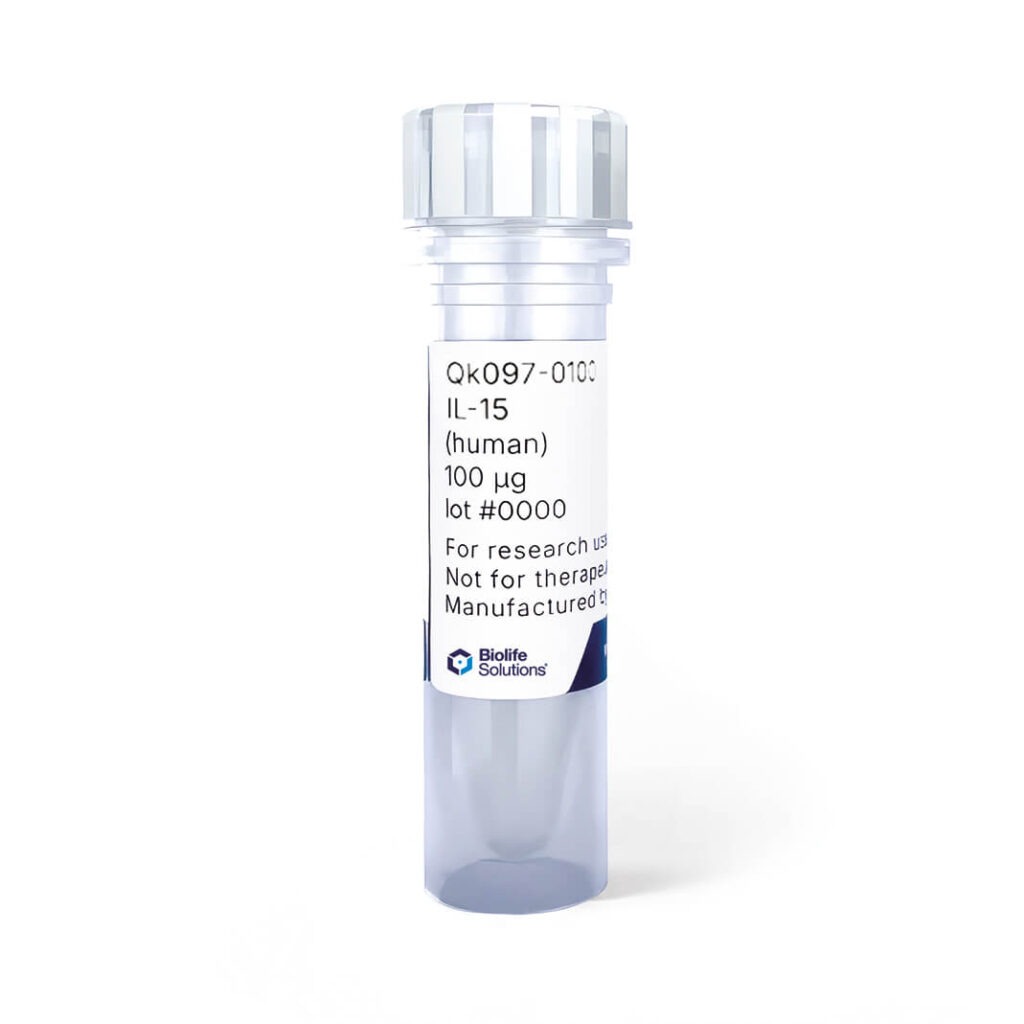
Support NK-cell expansion and cytotoxic lymphocyte persistence with highly bioactive IL-15, complete with regulatory documentation
IL-15 is a key cytokine that regulates immune responses by supporting the proliferation and persistence of cytotoxic lymphocytes. IL-15 promotes the expansion of NK cells and memory CD8+ T cells, supports T-cell survival, and influences myeloid differentiation, including dendritic cell maturation.
The IL-15 manufacturing process has been optimized to produce a highly bioactive protein with excellent lot-to-lot consistency for enhanced experimental reproducibility.
- Immune cell therapy expansion
- CAR-T cell therapy manufacturing
- Expressed in E. coli
- Animal origin-free (AOF) and carrier protein-free (CF)
- Manufactured under a certified ISO 9001:2015 Quality Management System
- 12.9 kDa monomer
- >98%, by SDS-PAGE quantitative densitometry
- Lyophilized from acetonitrile, TFA
- Reconstitute in 10mM HCl (Reconstitution solution A) at >50 μg/mL, add carrier protein if desired, prepare single use aliquots and store frozen at -20°C (short-term) or -80°C (long-term).
- Qk097-0025 = 25 µg
- Qk097-0050 = 50 µg
- Qk097-0100 = 100 µg
- Qk097-0500 = 500 µg
- Qk097-CTG-0500 = 500 µg
Please download IL-15 resources here:
Applications


NK Cells

Car-NK

Memory
CD8+ T Cells

T-Cell
MANUFACTURING
Essential for NK-cell expansion and memory phenotype support.
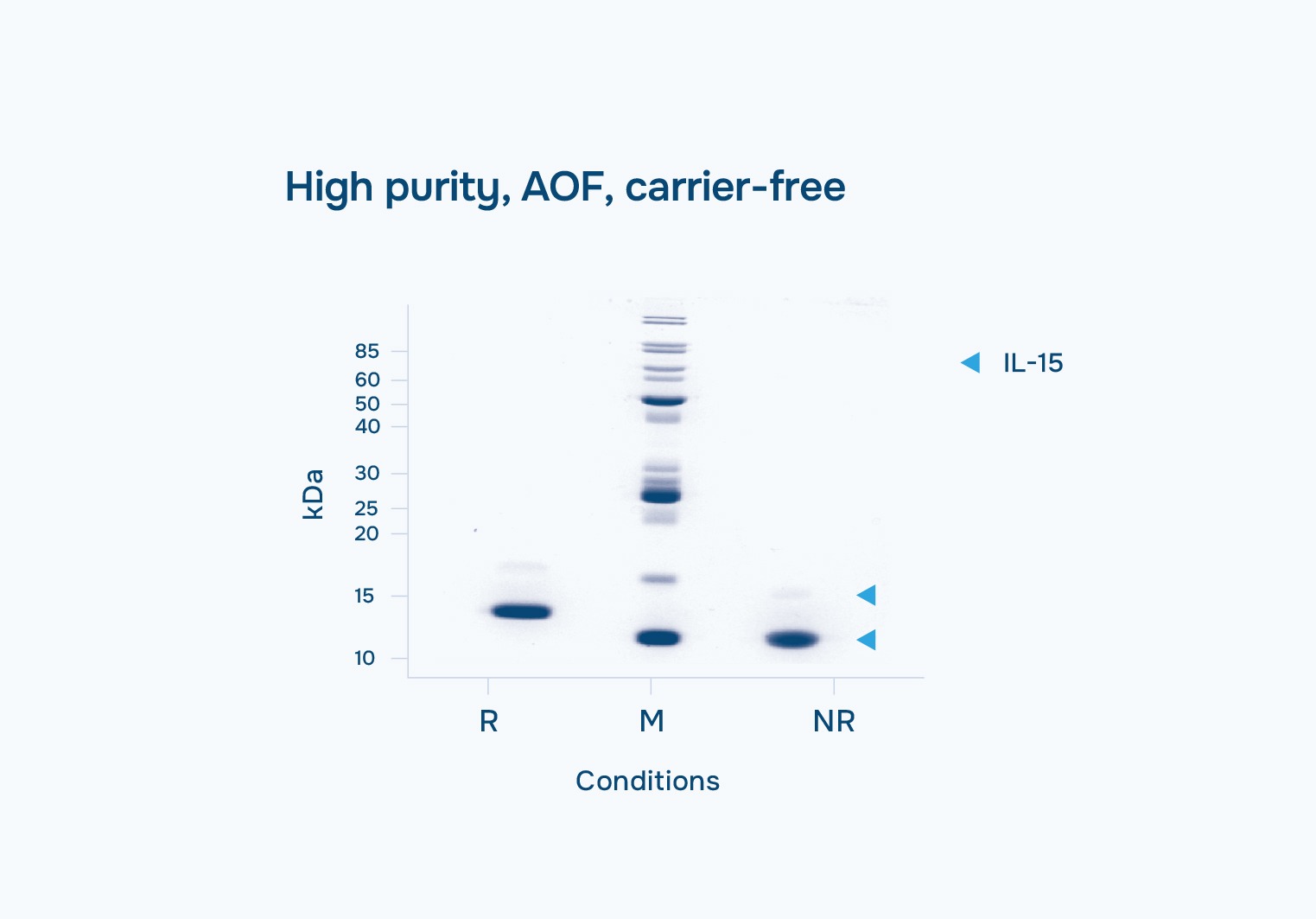

High Purity
Recombinant IL-15 migrates as a band at approximately 12 kDa (monomer) in reduced (R) and 9 kDa in non-reduced (NR) conditions. No contaminating protein bands are present. The purified recombinant protein 3 µg was resolved using 15% w/v SDS-PAGE in reduced (+β-mercaptoethanol, R) and non-reduced (NR) conditions and stained with Coomassie Brilliant Blue R250. Data from Qk097 lot #204728.
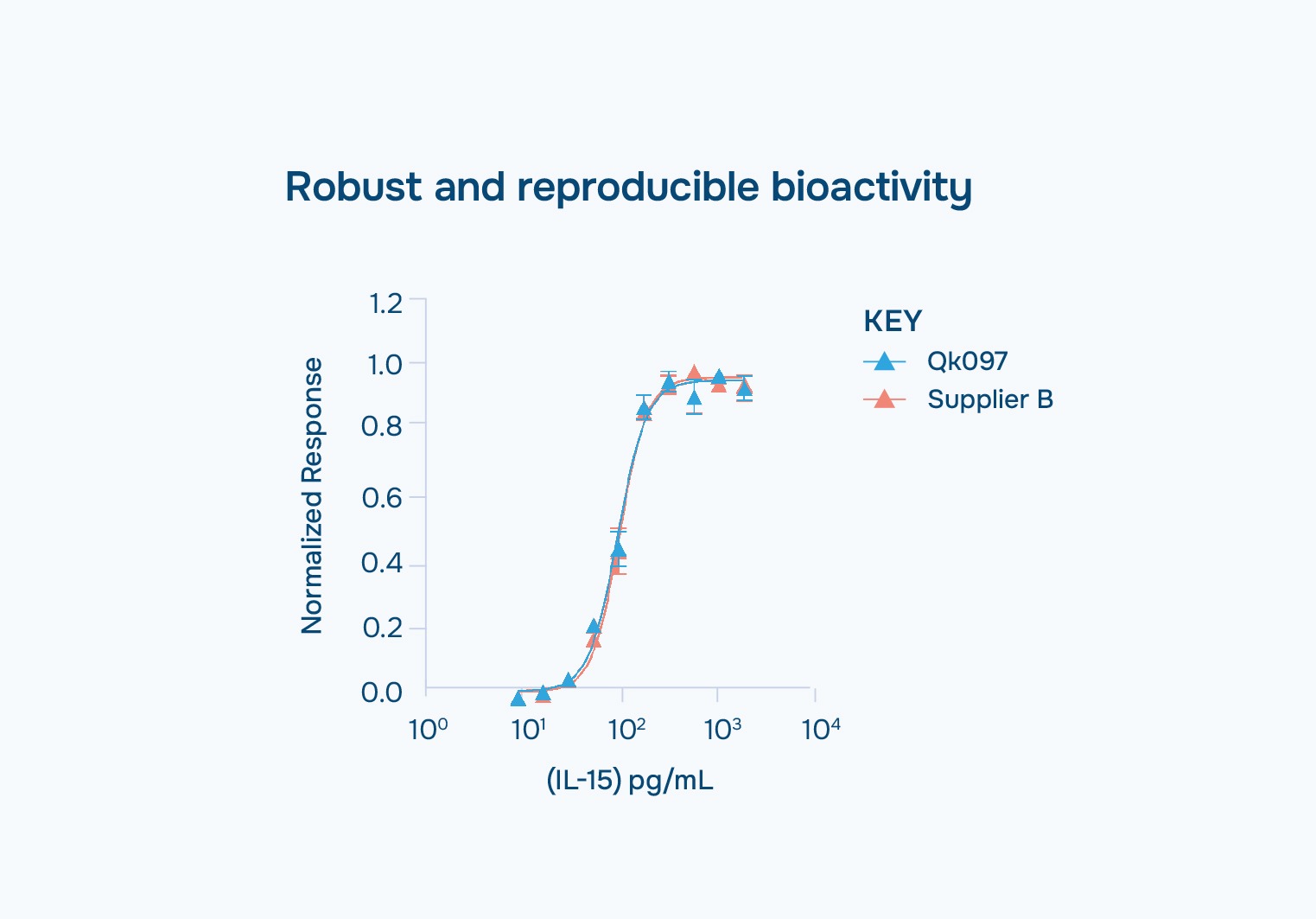
Bioactivity
IL-15 was more bioactive than the WHO (NIBSC) standard IL-15. IL-15 activity was determined using a SRE luciferase reporter assay in transiently transfected HEK293 cells co-transfected with the IL-15 receptors (IL-2Rβ and IL-2Rγ). Transfected cells were treated in triplicate with a serial dilution of IL-15 for 3 hours. Firefly activity was measured and normalized to the control Renilla luciferase activity. Qk095 #204736 EC50 = 0.25 ng/ml (19.4 pM). WHO (NIBSC) standard EC50 = 0.57 ng/ml.

How can we help you?
Sales inquiries
Product Background
Interleukin-15 (IL-15) is a pro-inflammatory cytokine expressed in a large variety of tissues and cell types including epithelial cells, fibroblasts, keratinocytes, nerve cells, monocytes, macrophages, and dendritic cells [1]. IL-15 shares many biological properties with IL-2, despite not having sequence homology, as it interacts with components of the IL-2 receptor (IL-2R) [1, 2]. IL-15 induces the activation of JAK kinases, as well as the phosphorylation and activation of transcription activators STAT3, STAT5, and STAT6 [2].
Recombinant IL-15 stimulates the proliferation and activation of multiple T cell subsets including NK, NKT, Th17, Treg, and CD8+ memory cells [3]. IL-15 is also essential for NK cell development and can be used for the development of NK cells from hematopoietic progenitor cells [4,5].
IL-15 has been shown to play a role in several inflammatory disorders, including rheumatoid arthritis, psoriasis and pulmonary inflammatory diseases.
Emerging data suggest that IL-15 may serve as a good therapeutic target, as there appears to be a beneficial effect of IL-15 neutralization in models of psoriasis and diabetes. IL-15 has also been implicated in both the development and treatment of cancers [1]. Recombinant IL-15 can also be used for the preconditioning of CAR T cells or for engineering cells to express IL-15 in vivo [6].
[1] Mishra A, Sullivan L, Caligiuri MA. Molecular pathways: interleukin-15 signaling in health and in cancer. Clin Cancer Res. 2014 Apr 15;20(8):2044-50. doi: 10.1158/1078-0432.CCR-12-3603. PMID: 24737791
[2] Carson WE, Giri JG, Lindemann MJ, Linett ML, Ahdieh M, Paxton R, Anderson D, Eisenmann J, Grabstein K, Caligiuri MA. Interleukin (IL) 15 is a novel cytokine that activates human natural killer cells via components of the IL-2 receptor. J Exp Med. 1994 Oct 1;180(4):1395-403. doi: 10.1084/jem.180.4.1395
[3] Lee H, Park SH, Shin EC. IL-15 in T-Cell Responses and Immunopathogenesis. Immune Netw. 2024 Feb 16;24(1):e11. doi: 10.4110/in.2024.24.e11
[4] Cooper MA, Bush JE, Fehniger TA, VanDeusen JB, Waite RE, Liu Y, Aguila HL, Caligiuri MA. In vivo evidence for a dependence on interleukin 15 for survival of natural killer cells. Blood. 2002 Nov 15;100(10):3633-8. doi: 10.1182/blood-2001-12-0293
[5] Mrózek E, Anderson P, Caligiuri MA. Role of interleukin-15 in the development of human CD56+ natural killer cells from CD34+ hematopoietic progenitor cells. Blood. 1996 Apr 1;87(7):2632-40. PMID: 8639878
[6] Srivastava S, Furlan SN, Jaeger-Ruckstuhl CA, Sarvothama M, Berger C, Smythe KS, Garrison SM, Specht JM, Lee SM, Amezquita RA, Voillet V, Muhunthan V, Yechan-Gunja S, Pillai SPS, Rader C, Houghton AM, Pierce RH, Gottardo R, Maloney DG, Riddell SR. Immunogenic Chemotherapy Enhances Recruitment of CAR-T Cells to Lung Tumors and Improves Antitumor Efficacy when Combined with Checkpoint Blockade. Cancer Cell. 2021 Feb 8;39(2):193-208.e10. doi: 10.1016/j.ccell.2020.11.005
Frequently asked questions
Disclaimer
For use in manufacturing of cellular or gene therapy products.
Not intended for in vivo applications.